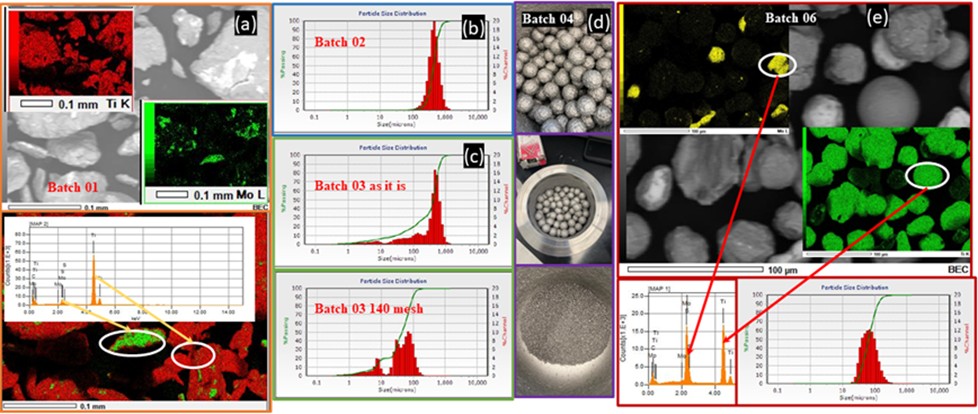
This project explored Ti-15Mo as a potential alloy for biomedical and industrial applications due to its strength-to-weight ratio, corrosion resistance, and biocompatibility. The objective was to prepare fine, printable powders via ball milling and investigate their processability in Laser Powder Bed Fusion (LPBF).
Methods
- Ball milled Ti-15Mo powders under different argon-protected conditions and surfactant variations.
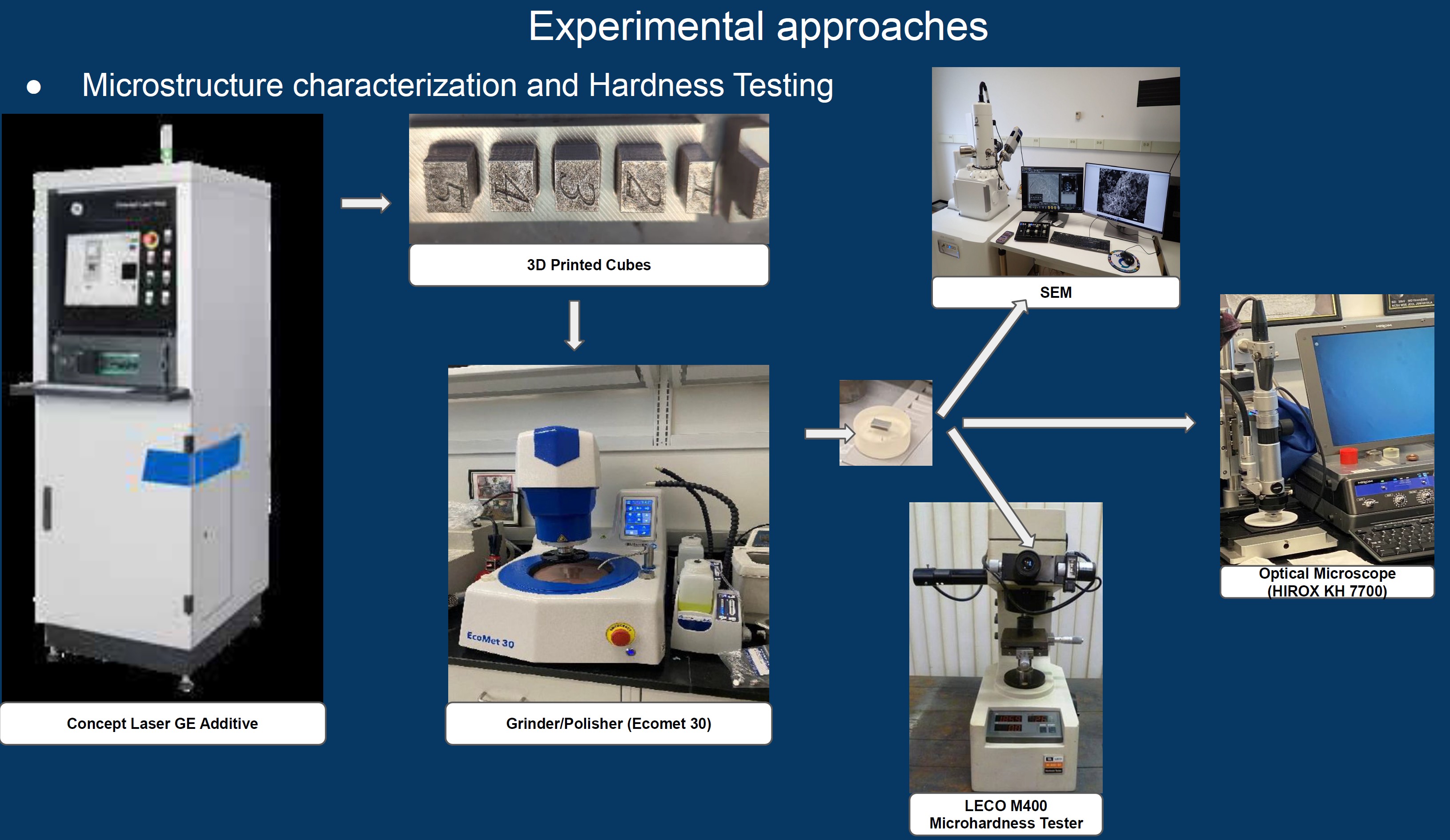
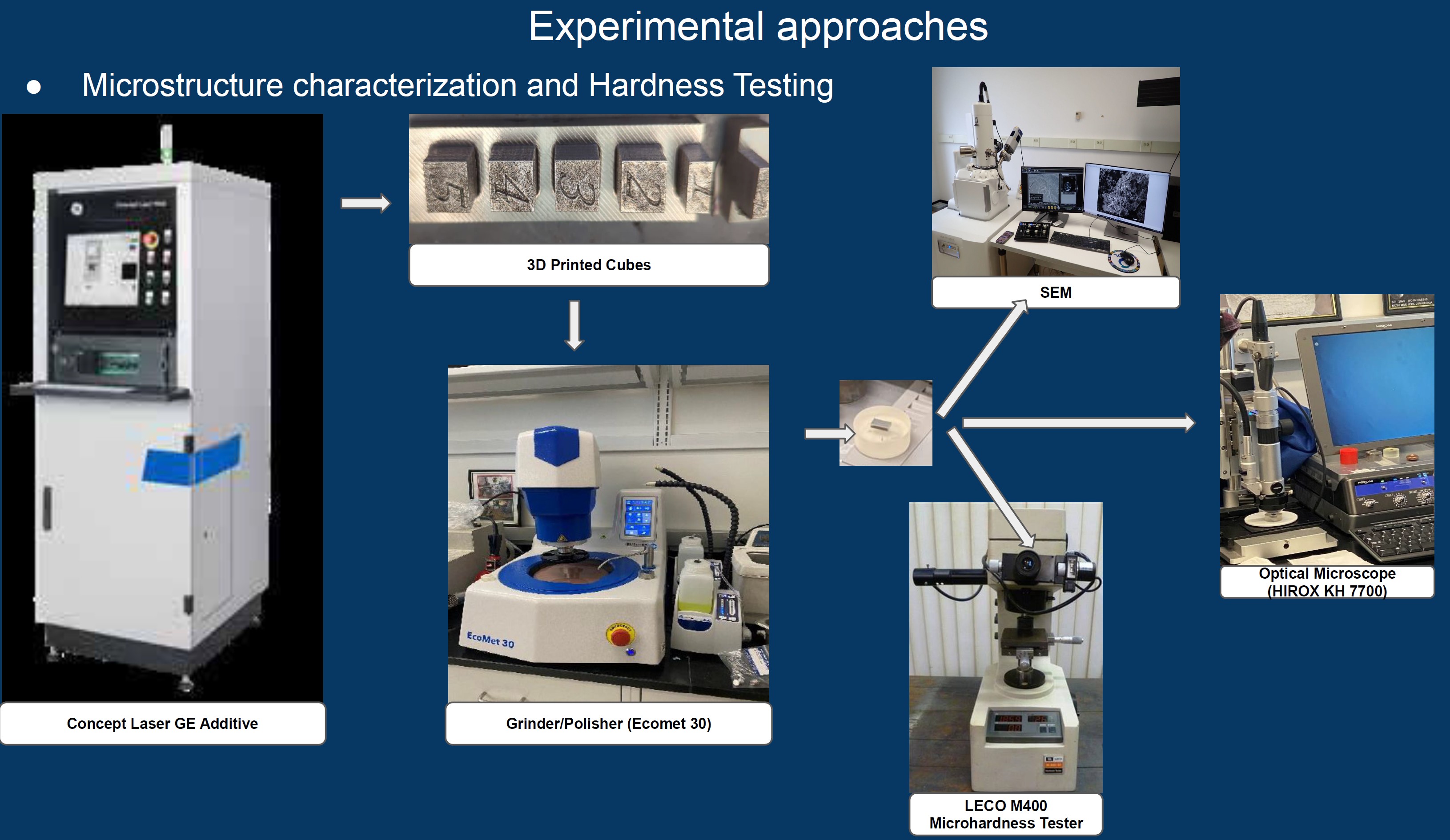
- Characterized powders using SEM/EDS, optical microscopy, LECO O₂/H₂ analysis, and Microtrac particle size distribution.
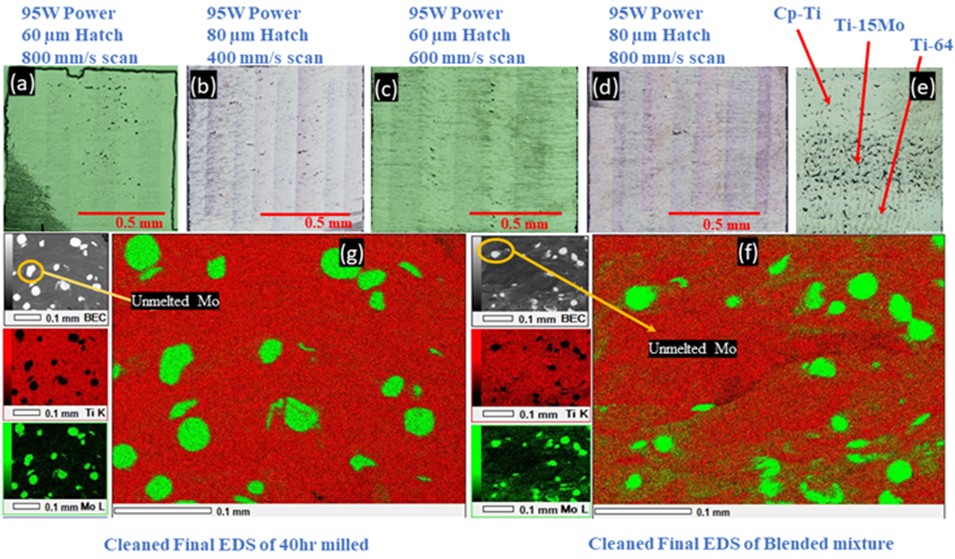
- Performed LPBF cube builds with varying power, scan speed, and hatch spacing.
- Analyzed microstructure, porosity, and hardness of printed samples.
Key Results
- Extended ball milling (40 hrs, 20:1 ball-to-powder ratio) produced spheroidal powders with improved spreadability.
- Optimal LPBF parameters (95 W, 80 µm hatch spacing, 800 mm/s, 25 µm layer thickness) yielded ~99% dense cubes with reduced porosity.
- Ti-15Mo printed parts demonstrated hardness up to 394 ± 66 HV, outperforming Cp-Ti and Ti-64 samples.